2026-27: The Politics of Remembering (and Forgetting)
August 25, 2026
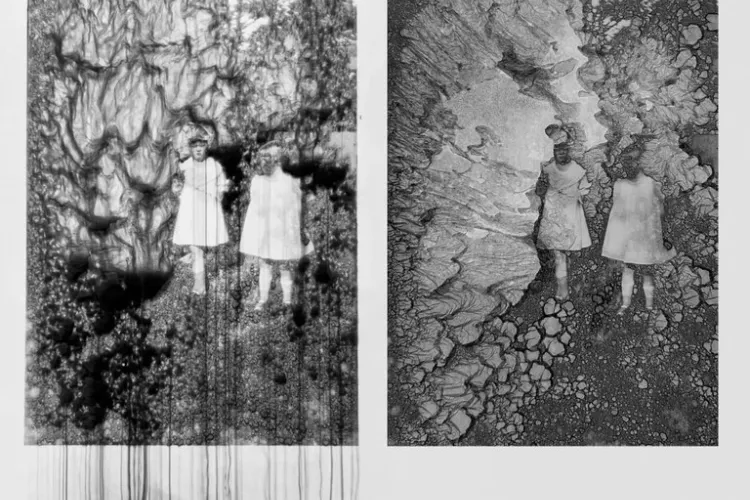
Image credit: A collage of shredded old photographs, symbolizing memory by Marcia Ross, MFA candidate at the Hite School of Art + Design, UofL
The Politics of Remembering (and Forgetting)
Memories are not just about the past. Instead, they reflect an active shaping of experiences that conform to, extend, or challenge the ways we make sense of our lives. By examining the practices that encourage who and what is remembered, we can attend to the emergent forces that construct our individual and collective pasts, presents, and potential futures.

David Anderson
For his 2026-2027 CCHS Bingham Faculty Fellowship project, David Anderson is creating a scholarly edition of the unpublished memoir of former Kentucky State University President Rufus B. Atwood (1897-1983). Atwood was arguably the most influential Black Kentuckian in the first half of the twentieth century, and also one of the most important educators in the commonwealth's history. His memoir, entitled From Segregation to Integration, 1929-1962, is a 212-page typescript that discusses his family history and youth in western Kentucky, his long presidency of the state’s lone public HBCU, his experience championing equal access and opportunity to education in Kentucky, and his detailed discussion of the fitful and often troubled progress of educational desegregation in Kentucky. The edition will make available an important historical witness to Kentucky history in the twentieth century, a nuanced assessment of educational leadership, and an assessment of the state's history of educational priorities, funding, and curricula.

Catron Booker
For the Bingham Faculty Fellowship 2026-2027, Professor Booker will engage extensively with the Mary S. Harrell Black Heritage Museum located in New Smyrna Beach, Florida. This collection includes expansive documentation of Black life over the course of the 20th century in this region as well as paintings by the Florida Highwaymen. The Florida Highwaymen were a highly prolific group of 26 self-taught African American painters that travelled throughout Florida selling their landscape paintings on eastern coastal roads from the 1950-80s. Prof. Booker will utilize the Bingham Faculty Fellowship to develop a short experimental film as a visual tribute to the Florida Highwaymen's strikingly vibrant aesthetic while also incorporating archival materials from this specific region’s Black Floridian heritage and its overlooked legacies of Black liberation.
Tyler Fleming
TBD

Selene Philips
It’s challenging to present Indigenous ideology, even when there’s public interest. Modern-day Chautauquas are dedicated to education, democracy, and the arts. Community leaders select scholars to perform infamous dead figures to entertain and inform Americans.
Most historic represented characters are white men. Women are increasingly included. Themes support manifest destiny. Humanity programs rarely include Indigenous board members. Potential Indigenous scholars must navigate spaces of power and access to present their history and culture. Decolonization, sovereignty, land repatriation, language revitalization, and cultural resurgence are not popular themes like presidents, first ladies, music, humorists, and aviation. Thus, the public is not exposed to Native Americans historic figures.
Examination of Chautauqua decision-making, topics, and calls provide keys to acceptable boundaries and opportunities that may open discussion.

April Portal
To what extent, if any, does politics require the forgetting (or renunciation) of the past and present for the sake of the future? How, if at all, does the possibility (and perhaps necessity) of such forgetting shape and inform the future and our relationship to it? Portal’s project takes up these questions as they are asked and (provisionally) answered in Maurice Blanchot’s 1962 fragmentary text L’attente l’oubli (Waiting Forgetting), a work that attempts to denature the political for the sake of a “messianic politics” and “ethics.” Portal explores how, in that work, Blanchot recontextualizes and therefore reworks several fragments first published in Martin Heidegger’s 1959 festschrift under the title “L’attente” (“Waiting”). Motivating this research is the hope that Blanchot’s work may help us rethink the relation between ethics and politics for today and tomorrow, especially in the long shadow cast by Heidegger’s affiliation with National Socialism.
Dana Potter
As the senior user experience designer for Fortepan US, Dana Potter conceptualizes and designs an interactive digital platform for vernacular photography. The platform is multifaceted including an archive interface that allows public access to thousands of images organized by time, place, and location as well as creator tools for persons to create websites and virtual tours with the images. For this project, Potter will design and implement connections between these tools for better platform organization, and apply the system to collections of images from Kentucky.
Related News